
BEEF MICROBIOTA PROFILES FROM PROCESSING TO STORAGE
Unravelling microbial transmission and growth scenarios under different storage and processing conditions to optimize product quality
Picture: Michael Bernkopf (VETMEDUNI)
Picture: Thomas Suchanek (VETMEDUNI)
Picture: Thomas Suchanek (VETMEDUNI)
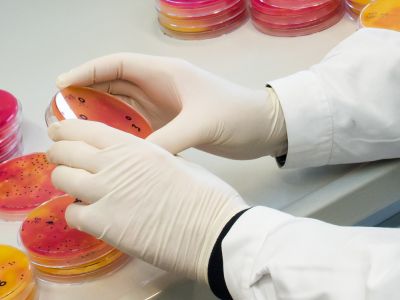
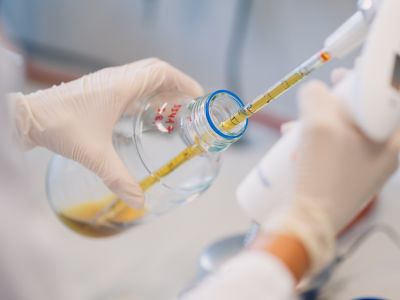
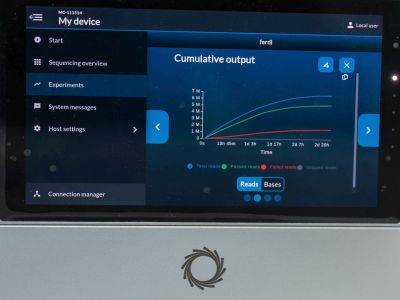
In order to achieve a more sustainable food management and production for future generations it is imperative to avoid unnecessary food loss and waste. Current data on loss and waste estimate that around 1.3 billion tons of food are being discarded every year. This corresponds to approximately one-third of the food produced globally. A large part of the food being lost is attributed to microbial spoilage caused by the contamination with pathogens or specific spoilage organisms during production and storage. Microbial meat contamination and re-contamination during slaughtering are particularly complex events that are hard to monitor. Human and technical interventions during processing and storage, animal-related microbial patterns, cleaning and disinfection routines, freeze-thaw cycles, storage temperatures, as well as stochastic contamination events all contribute to the final microbial community on a meat product. Even if all of these steps are perfectly executed and controlled, the risk of microbial spoilage of the product is still present. Therefore, it is essential to identify the most critical processing steps and storage conditions to ensure a microbiologically safe product. In this project, cutting-edge DNA sequencing technologies are used together with microbiological and molecular-biological standard tools to create a microbial risk map, showing microbial flows within a beef processing facility to identify microbial hotspots responsible for contamination. Furthermore, the influence of varying storage temperatures, freeze-thaw cycles, and the impact of sanitation steps on the composition of the microbial community on the final product are investigated.
Lead Researcher:
 Ass.-Prof. Mag.med.vet. Evelyne Selberherr, PhD
Team Leader
Centre for Food Science and Veterinary Public Health,Unit of Food Microbiology (University of Veterinary Medicine, Vienna)
evelyne.selberherr@vetmeduni.ac.at
+43 1 25077-3510
www.vetmeduni.ac.at